Yardenaler Greenhouses, Gazebos and Garden Structures

Yardenaler builds wooden walk-in greenhouses, galvanized raised beds, elevated cedar planters, and outdoor furniture designed for actual backyards — not showroom photos. Every greenhouse in the line uses multi-layer 6mm polycarbonate panels and a weatherproof wood frame that handles rain and snow, not just sunny afternoons. Sizes run from a compact 6×8 ft up to a serious 8×16 ft with 128 square feet of growing space, and matched shelf accessories exist for every footprint. Check current availability and pricing on Amazon.

✓ 6mm Polycarbonate Panels✓ 45° Adjustable Roof Vents✓ Matched Shelf System for Every Size
Shop the Yardenaler Store on Amazon →
Yardenaler 8x16 FT Greenhouse for Outdoor
6mm Panels, Not the Thin Standard 6mm Panels, Not the Thin Standard

Every Yardenaler greenhouse uses multi-layer 6mm polycarbonate panels — the same thickness found in commercial greenhouse construction — which transmit light for plant growth while blocking harmful UV rays.

Roof Vents That Open 45 Degrees Roof Vents That Open 45 Degrees

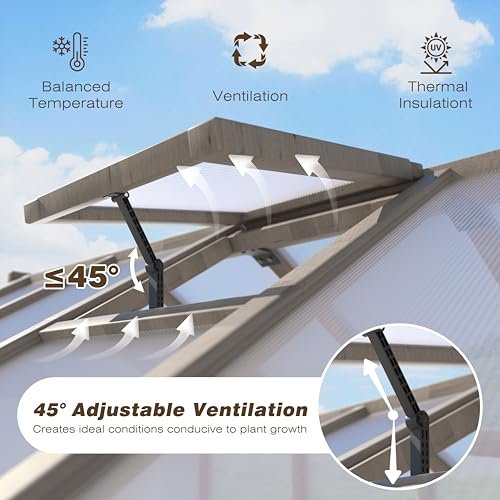
The adjustable roof vent on every Yardenaler greenhouse model opens to a full 45-degree angle — not a decorative slot — so you can actually manage interior temperature and airflow by hand, no tools required.

Matched Shelving for Every Greenhouse Size Matched Shelving for Every Greenhouse Size

Yardenaler offers a dedicated 2-pack wood shelf kit sized for each greenhouse footprint, from 90.67 inches (for 8 ft models) to 184.25 inches (for 16 ft models), with load capacities ranging from 90 to 130 lbs per shelf.

Lockable Doors on Every Walk-In Model Lockable Doors on Every Walk-In Model

Every walk-in greenhouse in the Yardenaler line includes a lockable door and a weatherproof wood frame built to handle rain and snow — the same frame construction across all eight sizes, from 6×8 ft to 8×16 ft.

Yardenaler Walk-In Greenhouses, 8-Foot Wide Models

The 8-foot-wide greenhouse line runs from 64 square feet to 128 square feet across five size options, giving serious home growers room to stand, move, and actually work inside. All five share the same 90.6-inch peak height, 6mm polycarbonate panels, and adjustable 45-degree roof vent — what changes is the footprint and how many plants you can fit.

Yardenaler 8x16 FT Greenhouse for Outdoor

8x16 Walk-In Greenhouse (Black)

The largest greenhouse in the Yardenaler lineup at 128 square feet — 96 inches wide by 190.2 inches deep — and the only model available in black. At 427 lbs it's a serious structure, with a 90.6-inch peak height, 21.6×21.6-inch roof vent, and a 29.1×71.4-inch lockable door. This is the one for growers who genuinely need maximum interior space and want a structure that reads as intentional in the yard.

The only black greenhouse in the Yardenaler line, and at 128 sq ft it's the right choice if you've outgrown smaller structures and need room to actually work inside.

See on Amazon
Yardenaler 8x14 FT Outdoor Greenhouse Kit

8x14 Walk-In Greenhouse (Mocha)

Second-largest in the 8-foot-wide family at 112 square feet, this mocha brown model measures 96 inches wide by 166.8 inches deep with the same 90.6-inch peak height as the 8×16. The roof vent runs 19.7×19.7 inches — slightly smaller than adjacent models — and the door matches the flagship at 29.1×71.4 inches. A real option for growers who want near-maximum space without committing to the full 16-foot depth.

Near-flagship growing space at a shorter depth — good if your yard has the width but not the length for a 16 ft run.

See on Amazon
Yardenaler 8x12 FT Greenhouse Kit with 6MM Thick Polycarbonate Panel for Outdoor

8x12 Walk-In Greenhouse (Mocha)

The 8×12 has the widest actual footprint in the lineup — 101.97 inches across versus 96 inches for most other 8-ft models — which gives a bit more usable interior width once the frame is accounted for. It covers 96 square feet, stands 90.55 inches tall, and carries the largest roof vent in the 8-ft family at 21.7×21.7 inches. At 376 lbs it's also the lightest of the three large 8-ft options.

The wider-than-listed frame (101.97 inches across) gives you a bit more shoulder room inside than the other 8-ft models — worth noting if you're planning workbenches along both walls.

See on Amazon
Yardenaler 8x10 FT Greenhouse Kit with 6MM Thick Polycarbonate Panel for Outdoor

8x10 Walk-In Greenhouse (Mocha)

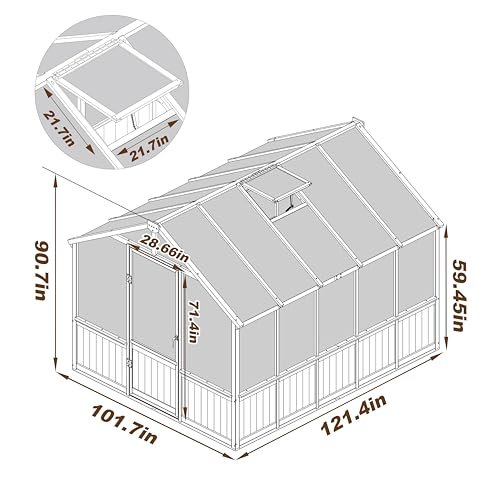
Eighty square feet of growing space in the most compact depth available in the 8-foot-wide family — 101.7 inches wide by 121.4 inches deep. The 90.7-inch peak height and 28.66×71.4-inch lockable door match the rest of the line. Important to know: this model ships in five boxes that may not arrive on the same day. Plan assembly after all boxes have shown up, not when the first one lands.

The right call if your yard has the 8-ft width but limited depth — just account for the five-box shipping and wait until everything arrives before you start.

See on Amazon
Yardenaler 8x8 FT Greenhouse Kit for Outdoor

8x8 Walk-In Greenhouse (Mocha)

The smallest and lightest 8-foot-wide model at 283 lbs, with a near-square 96×96.69-inch footprint and 64 square feet of interior space. It ships in four boxes and carries the same 90.6-inch peak height as every other 8-ft model in the line. First-time greenhouse buyers or anyone working with a small backyard will find this the easiest entry point into a real walk-in structure.

At 283 lbs and 64 sq ft it's the most manageable starting point in the 8-ft family — four-box delivery and the same walk-in height as the flagship.

See on Amazon
Yardenaler 6x12 FT Greenhouse Kit with 6MM Thick Polycarbonate Panel for Outdoor

6x12 Narrow Greenhouse (Mocha)

Seventy-two square feet across a 74×143.4-inch footprint — narrow enough to fit against a fence or along a side yard where 8-foot-wide structures get ruled out. The 83.5-inch peak height is about 7 inches shorter than the 8-ft family, which matters if you're growing tall plants. Same adjustable 45-degree roof vent and lockable door as the rest of the lineup, and at 317 lbs it's a solid structure for the space it occupies.

The 74-inch width is the key number here — if your side yard or fence line gives you less than 8 feet to work with, this is the model that fits.

See on Amazon
Yardenaler 6x10 FT Green House for Outdoor

6x10 Narrow Greenhouse (White)

The only white greenhouse in the Yardenaler lineup — a genuine differentiator if you're working with white fencing, a light-colored house exterior, or just prefer a cleaner visual. At 254.85 lbs it's the lightest 6-ft walk-in model, covers 60 square feet, and stands 84.28 inches tall. The door is narrower than other models at 23.58×68.31 inches, so keep that in mind if you're moving large equipment through it. Ships in three boxes.

The only white option in the greenhouse line — if matching the structure's color to your exterior matters, this is the one to look at.

See on Amazon
Yardenaler 6x8 FT Greenhouse Kit for Outdoor

6x8 Compact Greenhouse (Mocha)

The smallest and lightest greenhouse in the entire Yardenaler line at 248 lbs and a 74×97.6-inch footprint — 48 square feet total. The 83.5-inch peak height is consistent with the rest of the 6-ft family. It still carries the same 6mm polycarbonate panels, adjustable 45-degree roof vent, and lockable door as every other model. For a first greenhouse, or for a yard where space is genuinely tight, this is the honest starting point.

The lightest, most compact walk-in greenhouse in the lineup — a real structure with the same panel quality as the 8×16 flagship, just in 48 sq ft.

See on Amazon
Yardenaler Shelf Suitable for 16FT Wood Greenhouse

184" Greenhouse Shelf 2-Pack

At 184.25×15.35 inches with a 130 lb load capacity per shelf, this is the heaviest-duty shelf in the Yardenaler line — designed specifically for 8×16 and 6×16 greenhouse models. Triangular support construction handles bags of soil, nursery pots, and propagation trays without flex. The 2-pack gives you both long interior walls covered in a single order.

The only shelf rated to 130 lbs and sized for 16 ft greenhouse models — if you have the 8×16 black greenhouse, this is the shelf kit that completes the interior.

See on Amazon
Yardenaler Shelf Suitable for 14FT Wood Greenhouse

161" Greenhouse Shelf 2-Pack

The widest shelf in the lineup at 18.98 inches — notably broader than the 15.35-inch standard across the other four sizes — making it the best workbench option if you're doing potting, propagation, or any work that needs elbow room. Spans 160.79 inches to fit 8×14 and 6×14 greenhouse models, with a 120 lb load capacity per shelf. The 85.45 lb shipping weight gives a sense of how substantial these are.

The widest shelf in the line at 18.98 inches — meaningfully more workspace than the standard 15.35-inch shelves if you're doing active potting work inside a 14 ft greenhouse.

See on Amazon
Yardenaler Shelf Suitable for 12FT Wood Greenhouse

137" Greenhouse Shelf 2-Pack

Designed for 6×12 and 8×12 greenhouse models, this shelf runs 137.4 inches long and 15.35 inches wide with a 110 lb capacity per shelf. Triangular support keeps it stable under mixed loads — trays of seedlings on one end, heavier pots toward the middle. Same mocha brown wood finish as the greenhouse frame itself.

Rated to 110 lbs and sized to run the full length of a 12 ft greenhouse interior — the natural add-on for anyone with the 8×12 or 6×12 model.

See on Amazon
Yardenaler Shelf Suitable for 10FT Wood Greenhouse

114" Greenhouse Shelf 2-Pack

This 113.9×15.35-inch shelf fits both the 6×10 and 8×10 greenhouse models and carries a 90 lb load capacity per shelf — enough for nursery trays, small pots, and hand tools. Triangular support construction, matching wood finish, and the same straightforward assembly process as the rest of the shelf line.

Fits both 10 ft greenhouse footprints (6×10 and 8×10) — one order covers shelving for either model without guessing at sizing.

See on Amazon
Yardenaler Shelf Suitable for 8FT Wood Greenhouse

91" Greenhouse Shelf 2-Pack

The smallest shelf in the system at 90.67×15.35 inches, designed for 6×8 and 8×8 greenhouse models and rated to 90 lbs per shelf. At 90 lbs of capacity on a shelf that spans nearly the full 8-foot interior length, you can realistically run two full rows of nursery pots without coming close to the limit.

Sized for the two smallest greenhouse footprints — the right shelf to add if you have the 8×8 or 6×8 model and want organized growing space along both walls.

See on Amazon
Yardenaler 8ftx2ftx2ft Outdoor Raised Garden Bed

8x2 Galvanized Raised Bed 23" (Olive)

The tallest galvanized bed in the lineup at 23.1 inches — high enough to reduce meaningful bending during daily tending. Built from 0.025-inch galvanized steel with four aluminum support rods for added structural stability, 304 stainless steel screws, and a rubber safety strip along the top edge. The olive green color is unique to this height option. Default configuration runs 96×24 inches, but the 12-panel kit supports eight other layout combinations.

At 23.1 inches this is the tallest galvanized bed in the Yardenaler line — the aluminum support rods and stainless screws make it the most structurally specified option too.

See on Amazon
Yardenaler 8x2x1.4ft Galvanized Raised Garden Bed

8x2 Galvanized Raised Bed 17" (Green)

Mid-height at 17 inches — taller than a ground-level bed, shorter than the 23.1-inch model, and a practical choice for standard raised bed gardening where you want some depth without the extra reach. Same 0.025-inch galvanized steel construction, 304 stainless steel screws, oval shape with rubber safety edge, and open bottomless base as the rest of the galvanized line. The 9-in-1 modular system gives nine configuration options using the included 12 panels.

The middle ground in the galvanized bed lineup — 17 inches gives you real planting depth and enough height to deter most pets without the full 23.1-inch commitment.

See on Amazon
Yardenaler 8x2x1ft Galvanized Raised Garden Bed

8x2 Galvanized Raised Bed 11" (Green)

The lowest-profile option in the galvanized lineup at 11.1 inches — a good fit for shallow-rooted crops like lettuce, herbs, and annual flowers that don't need deep soil volume. It uses the same 0.025-inch galvanized steel, 304 stainless steel screws, rubber safety edge, and open-base design as the other two heights. The 9-in-1 modular panel system supports the same nine layout configurations despite the reduced height.

Best suited for herbs, lettuce, and shallow-rooted annuals — the 11.1-inch depth keeps soil volume low and installation straightforward.

See on Amazon
Yardenaler 48x24x30 in Raised Garden Bed with Legs

Cedar Elevated Planter 48" (Rustic)

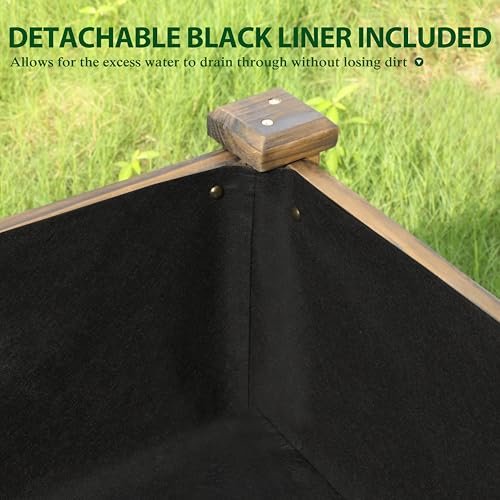
Solid cedar with a rustic finish, standing 29.92 inches tall with an overall footprint of 48.03×24.21 inches and an interior growing area of 45.28×21.26×8.6 inches — 4.47 cubic feet of soil space. The 330 lb weight capacity is the higher of the two elevated cedar models, backed by three bottom support panels that add structural rigidity under load. Three drainage holes and an included fiber liner handle water management without a separate purchase.

The 330 lb weight capacity makes this the structurally stronger of the two cedar elevated beds — worth choosing if you're planning to plant heavier crops or fill it with dense growing medium.

See on Amazon
Yardenaler 47x23x30in Raised Garden Bed with Legs

Cedar Elevated Planter 47" (Natural)

Natural cedar finish at 30.3 inches tall — the tallest standing height in the elevated bed line, about a third of an inch taller than the rustic model. Overall size runs 47.1×22.6 inches with the same 44.5×20.2×8.6-inch interior growing area (4.47 cubic feet) and the same fiber liner and three-drainage-hole system. Weight capacity is 220 lbs. Assembly takes around 30 minutes connecting legs to frame panels.

Slightly taller at 30.3 inches with a cleaner natural wood finish — the right pick if aesthetics lean toward a natural look and the 220 lb capacity covers what you're growing.

See on Amazon
Yardenaler Foldable Chaise Patio Lounge Chair 2 Pack with Face and Arm Hole

Face Hole Lounger 2-Pack (White)

The only multi-unit option in the lounger line — a 2-pack in cream white with face holes, arm holes, five-position adjustable backs, detachable pillows, and side storage pockets. The combined shipping weight is 32 lbs for both chairs. Upgraded breathable and waterproof fabric, no assembly required, and the folding design with integrated carrying straps makes moving them from storage to patio a one-person job.

The only 2-pack in the lineup — if you need matching loungers for two people, this is the straightforward answer at better per-unit value than buying two singles.

See on Amazon
Yardenaler Outdoor Foldable Chaise Lounge Chair with Face Hole

Face Hole Lounger Single (Blue)

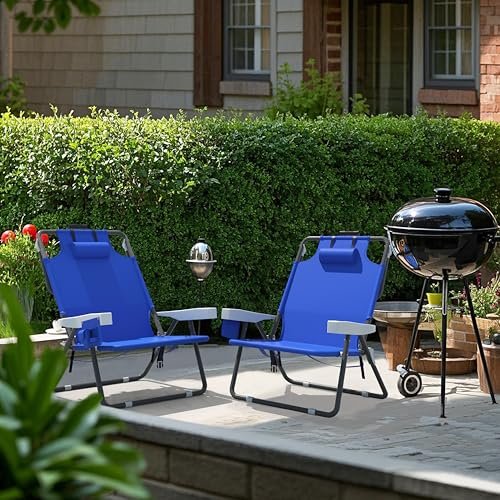
A single lounger at 17 lbs with the face hole and arm hole configuration — the cushioned surround around the face hole means lying face-down doesn't press against bare plastic or fabric. The face hole cover is removable, which converts it to a standard chaise if you want both configurations from one chair. Powder-coated black steel tube frame, waterproof mesh fabric, anti-slip leg caps, and a 265 lb weight capacity. Comes with pillow and side pocket.

The removable face hole cover is a genuine feature — you get the face-down tanning position when you want it and a standard chaise lounge when you don't, all from the same chair.

See on Amazon
Yardenaler Foldable Outdoor Chaise Lounge Chair with Arm & Face Hole

Face Hole Lounger Single (Gray)

The lightest single lounger in the lineup at 15 lbs — two pounds lighter than the blue face hole model — with the same face hole and arm hole design, five-position back, detachable pillow, and side pocket. Upgraded waterproof and breathable fabric, no assembly, folding with carrying straps. The 74.4×22.5-inch laid-flat dimensions are consistent with the other loungers in the line.

At 15 lbs it's the lightest option with the face hole feature — the right choice if portability to the beach or a campsite matters as much as poolside use.

See on Amazon
Yardenaler Outdoor Foldable Beach Chaise Lounge Chair with Detachable Pillow & Pocket

Beach Lounger 300LB (Blue)

The most-reviewed product in the Yardenaler catalog at 4.6 stars from 100 buyers — and the standard chaise without a face hole. It carries the highest weight capacity in the lounger line at 300 lbs, uses 600-D Oxford fabric (the only model specifying Oxford weave), and includes both a water-resistant storage bag and a cup holder bag. Folded size is a very compact 19.5×2.9×31.1 inches. Anti-slip caps on all four legs.

The proven option — 100 reviews and a 4.6-star rating, the highest weight capacity in the line at 300 lbs, and the only model using 600-D Oxford fabric.

See on Amazon
Yardenaler Board Game Table with Removable Table Top

Hexagonal Gaming Table (Natural)

A hexagonal gaming table with six equal sides — each side measuring 31.1 inches — so every player faces the center at the same distance. The inner gaming space measures 26 inches per side. Table height is 30.1 inches, total weight 105.2 lbs, and the 62.2×62.2-inch overall footprint is roughly square, which helps with room placement. Detachable sliding cup holders and sliding trays for cards and accessories are included alongside the leatherette game mat.

The hexagonal shape eliminates corner seats and the sight-line disadvantages that come with rectangular tables — everyone faces the board equally, which actually changes how games feel at four or six players.

See on Amazon
Yardenaler Solid Wood Board Game Table

Rectangular Gaming Table (Natural)

The rectangular model with the largest recessed gaming area in the lineup — 58×33 inches at 3.2 inches deep, giving enough space for most hobby board game setups including large tile-laying games. Overall size is 63×38.2×30.4 inches, weight is 109.24 lbs, and the flush pull design keeps the tabletop surface clean when in dining mode. Six cup holders are built in. Same rubberwood construction, 440 lb tabletop capacity, and 300 lb gaming area rating as the hexagonal model.

The 58×33-inch recessed gaming area is the largest playing surface in the line — if you're running Twilight Imperium or any large-format game, this is the table that actually fits the board.

See on Amazon

Yardenaler Greenhouse Size Guide, 6-Foot vs 8-Foot

The single most important measurement to nail before ordering is width — because once your foundation is set, you can't add inches. Yardenaler's greenhouse line splits into two footprint families: 6-foot-wide models (74 inches across) and 8-foot-wide models (96 to 102 inches across). That 22-to-28-inch difference determines whether a structure fits a side yard, a fence line, or a more open backyard space.

The 6-Foot Family, 74 Inches Wide

Three models — the 6×8, 6×10, and 6×12 — all share a 74-inch width and an 83.5-to-84.28-inch peak height. That height is about 7 inches shorter than the 8-foot family, which matters if you're growing indeterminate tomatoes, climbing plants, or anything that wants vertical room. The narrower profile is genuinely useful for side yards with fence clearance between 7 and 8 feet, or for placing the structure along a property line without overhanging. The smallest, the 6×8, covers 48 square feet and weighs 248 lbs. The 6×12 gets you to 72 square feet and 317 lbs while still fitting tight spaces that an 8-foot-wide structure would have to skip.

The 8-Foot Family, 96 to 102 Inches Wide

Five models — the 8×8 through the 8×16 — run from 64 square feet to 128 square feet. All five share a 90.5-to-90.7-inch peak height, which is walk-in comfortable for most adults even when shelving is added along the walls. The 8×12 has the widest actual footprint in the entire lineup at 101.97 inches — slightly broader than the other 8-foot models — so measure that specific dimension if clearance is close. The 8×16 flagship tops out at 128 square feet and 427 lbs; the 8×8 entry model comes in at 64 square feet and a more manageable 283 lbs.

How to Measure Your Space Before Ordering

Measure your available footprint and subtract at least 12 inches on each side for clearance — door swing on one end, plus access room for maintenance and panel cleaning. The listed product dimensions are the full structural footprint including frame. For the 8×10, for example, that's 101.7 inches wide by 121.4 inches deep; your cleared space should be at least 125 inches by 145 inches to work comfortably around it. Also check vertical clearance if you're placing the greenhouse under roof overhangs or near soffits — the 8-foot-wide models need at least 91 inches of overhead clearance, and the 6-foot-wide models need at least 85 inches.

Matching Size to Growing Goals

Here's the honest breakdown by use case:

  • First-time greenhouse grower, smaller yard: the 6×8 (48 sq ft) or 8×8 (64 sq ft) — enough space for two or three growing rows and a narrow work aisle.
  • Year-round vegetable growing for a household: the 8×12 (96 sq ft) or 8×14 (112 sq ft) — room for dedicated beds, a workbench shelf, and actual circulation inside.
  • Serious propagation or overwintering large collections: the 8×16 (128 sq ft) — the only model where you can run full-length shelves on both walls and still have a center aisle worth walking through.
  • Side yard or fence-line placement: any 6-foot-wide model — measure your clearance first and work down from the 6×12 if depth allows.

One note that doesn't appear on the product listings but matters: the matched shelf kits are sized to the greenhouse length, not the width. The 184-inch shelf fits 16-foot models; the 91-inch shelf fits 8-foot models. If you plan to add shelving, order the matched shelf at the same time — it's designed for the interior dimensions of a specific footprint, not a general-purpose shelf that happens to fit.

Gardening Without Bending, Products Built for It

There's a real segment of buyers who aren't shopping for the largest greenhouse or the most modular raised bed — they're shopping for whatever lets them garden without pain. Back problems, knee issues, hip replacements, general fatigue from bending and kneeling: these buyers know exactly what they need, and standard ground-level raised beds don't cut it. Yardenaler's two cedar elevated beds and the 23.1-inch galvanized bed are the relevant products for this conversation.

Standing Height, What That Actually Means

The cedar elevated beds stand at 29.92 inches (rustic) and 30.3 inches (natural). For reference, a standard kitchen counter is 36 inches — so these are slightly lower than a counter but high enough that most adults can tend plants, water, weed, and harvest without bending at the waist. The 8×2×2-foot galvanized bed sits at 23.1 inches, which isn't standing height but cuts the bend angle significantly compared to a ground-level bed. All three are bottomless, so you're not lifting a heavy container — the structure holds the soil, and the roots grow down into the ground below if they need to.

The Cedar Elevated Beds, Specifics That Matter

Both cedar models include a fiber liner and three drainage holes — you don't need to source a liner separately, which matters when the purchase is already coming in multiple boxes. The interior growing area is 8.6 inches deep across both models, which works for tomatoes, herbs, lettuce, peppers, and most flowers. The 4.47 cubic feet of soil space is the same for both. Where they differ is weight capacity: 330 lbs for the rustic finish model versus 220 lbs for the natural finish. If you're filling with dense native soil or a heavy growing medium, that 110-pound difference is worth factoring in. Assembly runs about 30 minutes per the product specification — connecting legs to frame panels, no specialized tools.

The Galvanized Option for Less Bending

The 23.1-inch galvanized raised bed (olive green) is a different design approach — modular steel panels rather than a wood frame with legs — but the height benefit is real. At 23.1 inches it puts your soil surface roughly waist-level for shorter adults and mid-thigh for taller ones, which meaningfully reduces the forward lean required for daily tasks. The 9-in-1 configuration system means you can set it up as a long narrow 96×24-inch run or reconfigure it as a wider 60×60-inch near-square — the same 12 panels, different layout. The aluminum support rods on the 23.1-inch model add structural stability that the shorter two heights don't include, which is relevant when the wall panels are handling taller soil loads.

Honestly, if back pain or mobility is the primary driver, the cedar elevated beds are the more purpose-built answer — the leg design holds the planting surface at a fixed standing height rather than just raising the soil above ground level. But if you want more configuration flexibility, a longer planting run, or prefer metal over wood for longevity, the 23.1-inch galvanized bed covers the need without requiring you to kneel.

What Yardenaler Greenhouse Assembly Actually Involves

A Yardenaler walk-in greenhouse is not a pop-up tent. The 8×14 model, for example, weighs in the range of the larger models at several hundred pounds across multiple boxes — and one buyer on Reddit noted it took two days to assemble solo. That's not a complaint about the product; that's what assembling a real walk-in wooden greenhouse looks like. Setting accurate expectations here prevents the kind of frustration that shows up in reviews where someone expected a weekend afternoon and got a full weekend.

Multi-Box Delivery, Don't Start Until Everything Arrives

Several models in the line ship in multiple boxes that may arrive on different days. The 8×10 ships in five boxes; the 8×8 ships in four; the 6×10 ships in three. This is stated in the product listings and worth paying attention to, because starting assembly before all boxes arrive is the fastest way to get stuck partway through with a missing panel or hardware bag. When each box lands, open it, check the contents against the included hardware list, and set everything aside until the full delivery is complete. If a part is missing — see the support section below — it's far easier to address before assembly is underway than after the frame is partially built.

Realistic Assembly Time

A solo assembly of the 8×14 took one buyer approximately two full days. Assembly with a second person will be meaningfully faster, but plan for at least one full day on any of the larger 8-foot models (8×12, 8×14, 8×16). The 6×8 and 8×8 models are more manageable and could realistically be completed in a long afternoon with two people. The key factors that extend assembly time are not complexity — the frame system is consistent across the line — but rather the need to hold pieces steady during connection, which a second pair of hands solves immediately.

Surface and Tools

Assembly on a flat, level surface is not optional — it's the requirement that determines whether pre-drilled holes line up correctly. An unlevel foundation is the most common cause of hole misalignment, and it's much harder to correct once the frame is partially assembled. Assemble on level ground, check with a level before starting, and don't rush the base frame. Tools you'll need: a drill (for driving screws into pre-drilled holes), a level, and a helper for holding panels during frame assembly. Hardware for anchoring — stakes for soil installation and expansion bolts for concrete — is included with the greenhouse.

After Assembly, Wood Maintenance

Yardenaler's greenhouse frames use weatherproof wood and the shelf kits specifically note that applying a coat of waterproof paint in moist climates will extend their service life. This isn't a product flaw — it's the standard reality of outdoor wood structures, the same maintenance expectation you'd have for a cedar deck or a wood fence. The shelf listing language puts it directly: "just wipe it down with a damp cloth and avoid harsh chemicals to preserve its finish." Clean annually, apply a waterproof coat if you're in a particularly wet climate, and the wood frame holds up as the product description says: through rain and snow, not just sunny days.

All 8 Yardenaler Greenhouses Side by Side

All eight greenhouse models share the same core features — 6mm polycarbonate panels, adjustable 45-degree roof vent, lockable door, and a weatherproof wood frame. What changes between models is the footprint, weight, door size, and vent dimensions. Use this table to find the right size before you order, and check your available space against the overall dimensions listed — these are the full structural footprints including frame overhang, not interior measurements.

Model Overall Size (W × D × H inches) Footprint (sq ft) Weight (lbs) Door Size (W × H inches) Vent Size (W × D inches) Ships in (boxes) Color
8×16 FT 96 × 190.2 × 90.6 128 427 29.1 × 71.4 21.6 × 21.6 Black
8×14 FT 96 × 166.8 × 90.6 112 29.1 × 71.4 19.7 × 19.7 Light Mocha Brown
8×12 FT 101.97 × 144.7 × 90.55 96 376 28.66 × 71.4 21.7 × 21.7 Light Mocha Brown
8×10 FT 101.7 × 121.4 × 90.7 80 433 28.66 × 71.4 5 Light Mocha Brown
8×8 FT 96 × 96.69 × 90.6 64 283 29.1 × 71.4 4 Light Mocha Brown
6×12 FT 74 × 143.4 × 83.5 72 317 Light Mocha Brown
6×10 FT 74.02 × 120.08 × 84.28 60 255 23.58 × 68.31 21.77 × 20.08 3 White
6×8 FT 74 × 97.6 × 83.5 48 248 Light Mocha Brown

A few things the table makes obvious: the 8×12 has the widest physical footprint at 101.97 inches across — wider than both the 8×10 and 8×16 — so measure that specific dimension if clearance is tight. The 6×10 white model has the narrowest door in the lineup at 23.58 inches wide, which matters if you're regularly moving equipment through it. And the 8×10 is the heaviest model per square foot at 433 lbs, heavier even than the larger 8×14 — factor that into site prep and delivery logistics.

What Buyers Say About Yardenaler Products

"Put together the 8×14 greenhouse by myself over a couple of days. The instructions were clear enough, the pre-drilled holes lined up once I got the base level, and the polycarbonate panels snapped into place without fighting them. It's a real structure — heavier and more substantial than I was expecting from a kit. I'm growing tomatoes and peppers through a second season now with no issues."
— Daniel R., serious home grower, Midwest
"The 8×8 was the right call for my backyard. I measured twice and went with the smallest 8-foot model because I didn't want to overcommit for a first greenhouse. It fits exactly where I planned it, the lockable door is genuinely useful for keeping the dog out, and the 45-degree vent opening actually makes a noticeable temperature difference on hot afternoons. My only note: have a helper for the frame panels — it's manageable solo but faster with two."
— Sandra K., first-time greenhouse buyer, Pacific Northwest
"I bought the cedar elevated garden bed — the rustic finish, 48×24 inches — specifically because of back surgery recovery. The 29.92-inch height is the real thing. I can tend my plants, water, weed, pull dead leaves, and do it all standing upright. The fiber liner was already included, assembly took me about 35 minutes, and it's held up through a full season of watering and soil weight without any flex in the frame."
— Patricia M., buyer with mobility concerns, Southeast
"The beach lounger with the 300-pound capacity was exactly what I needed — I'm a bigger guy and most outdoor chairs feel like they're tolerating me rather than designed for me. The 600-D Oxford fabric is noticeably thicker than the cheap poolside chairs I've gone through before. Folds flat in seconds, and the compact fold size (under 3 inches deep) actually fits in the back of my car without rearranging anything."
— Marcus T., practical buyer prioritizing weight capacity, South Texas
"We put the hexagonal game table in the living room and honestly it looks like furniture, not a game table. The removable top panels flip off in maybe 20 seconds. What I didn't fully appreciate until we used it: the hexagonal shape genuinely changes how group games feel — no one is stuck in a corner seat, everyone reaches the middle equally. At six players it's noticeably better than our old rectangular table."
— Allison W., board game enthusiast, replacing a standard dining table setup
"I got the 6×12 greenhouse because my side yard is only about 80 inches wide between the fence and the house. The 74-inch footprint with some clearance on each side was exactly the constraint I was working with. Took the better part of a weekend to put together with my husband helping. It's been up through a wet Pacific Northwest winter so far — the frame and panels are holding up, no leaks, no warping."
— Jennifer L., narrow-lot buyer, Pacific Northwest

Common Questions About Yardenaler Greenhouses and Outdoor Structures

What type of gazebo lasts the longest?

Cedar is the most reliably durable wood for outdoor structures — it contains natural oils that resist rot, insects, and decay without chemical treatment, and it holds up well through seasonal temperature swings. A properly maintained cedar structure typically lasts 10 to 15 years or longer. Galvanized steel frames offer 15 to 20 years when properly anchored and checked for surface damage annually. Yardenaler's greenhouse frames use weatherproof wood construction designed for year-round outdoor use, including rain and snow.

What are the 5 disadvantages of a greenhouse?

Honestly, the most common ones are: high upfront cost, significant assembly time (the Yardenaler 8×14, for example, took one buyer two days to assemble solo), ongoing heating costs in cold climates since polycarbonate panels alone won't hold heat through a hard freeze, pest management inside the enclosed space, and local permit requirements — some municipalities require permits for permanent outdoor structures. Check local codes before ordering any walk-in greenhouse model.

What are the disadvantages of polycarbonate greenhouses?

Polycarbonate scratches more easily than glass, so avoid abrasive cleaners on the panels. Lower-quality panels also yellow and lose light transmission from UV degradation over time — which is why panel thickness matters. Yardenaler uses 6mm multi-layer polycarbonate rather than the thinner 4mm panels common in budget kits; the additional thickness improves structural rigidity and UV resistance. The trade-off versus glass is clarity — polycarbonate diffuses light slightly rather than transmitting it directly, which is actually beneficial for preventing leaf scorch.

What are the most common greenhouse mistakes?

Ventilation failure is the most damaging — interior temperatures in a closed polycarbonate greenhouse can spike 30°F or more above ambient on a sunny afternoon, which kills plants faster than cold does. Yardenaler's 45-degree adjustable roof vent addresses this directly; open it during the day and close it at night. The other common mistakes are overwatering (enclosed spaces hold humidity and slow soil drying), planting too densely for the square footage, and assembling on an unlevel surface, which causes pre-drilled holes to misalign during frame construction.

Which greenhouse brand is best?

The most useful answer is: look at panel thickness, frame material, and vent design rather than brand name. A 6mm polycarbonate panel transmits light and holds up structurally better than a 4mm panel; a wood frame handles expansion and contraction differently than an aluminum frame in cold climates. Yardenaler's greenhouse line uses 6mm multi-layer panels and a weatherproof wood frame with adjustable 45-degree roof vents across all eight models. Check current reviews and verify specs before comparing directly to any other option.

Can a gazebo stay up all year round?

Yes — if it's built for it. The key factors are frame material, roof construction, and anchoring. A hardtop structure with a galvanized steel or solid wood frame and proper ground anchoring handles year-round weather in most US climates; a soft-top pop-up canopy generally can't. Yardenaler's wooden greenhouse frames are specified for rain and snow use, not just sunny days. Regular maintenance — checking frame connections and clearing debris from the roof — keeps any permanent structure performing through seasonal changes.

What are common gazebo design mistakes?

The most damaging one is an unlevel or unstable foundation — an uneven base causes frame stress, misaligned panels, and in severe cases structural instability over time. Concrete pads and pavers are better bases than bare soil for permanent structures. Another frequent mistake is underestimating the footprint relative to furniture: a 10×10 structure fits a small bistro set, not a full dining set and seating. And flat-roof pergola designs — like a cedar pergola — do not block rain; buyers expecting rain cover from an open-lattice roof will be disappointed.

What is the average lifespan of a gazebo?

Wood structures with proper maintenance typically last 10 to 15 years. Aluminum frames run 15 to 20 years. The critical variable in both cases is maintenance — a cedar structure that's periodically re-stained and checked for loose hardware at the frame connections will outlast a neglected one by years. Yardenaler's cedar elevated garden beds use solid non-toxic cedar with natural decay resistance; the brand recommends oil sealing or staining to extend service life, which is standard practice for any quality outdoor cedar product.

Should outdoor furniture be covered over winter or left uncovered?

Cover it. Even weather-resistant materials degrade faster with sustained exposure to freezing temperatures, moisture cycling, and UV. Yardenaler's foldable chaise loungers — including the blue beach lounger rated to 300 lbs — fold to a compact 19.5×2.9×31.1 inches, making indoor or covered storage straightforward. For any lounger or outdoor chair that can fold, bringing it inside or into a covered space over winter is the single most effective way to extend its service life past the first two seasons.

Is a pergola better with sides on or off in wind?

In high wind, sides off is safer for temporary structures — wind passing through reduces uplift force on the frame. For permanent anchored structures, proper anchoring matters more than the side panel decision. Either way, Yardenaler's wood greenhouse frames are anchored with ground stakes (for soil) or expansion bolts (for concrete), both included with the product. A greenhouse with properly set anchors on a level foundation handles wind load significantly better than an unanchored structure regardless of panel configuration.

What is better, a pergola or a gazebo?

Different use cases. A pergola with an open flat-roof design — like Yardenaler's cedar pergola line — provides shade and structure but does not block rain. A hardtop gazebo with a galvanized steel or solid roof provides actual weather protection. If your primary need is rain cover, choose a hardtop. If you want a visual structure, a defined outdoor room, and shade without caring about rain, a flat-roof pergola delivers more design flexibility at lower cost. The two are not interchangeable for rain protection.

Do gazebos increase property value?

A permanent, well-constructed outdoor structure generally adds to perceived and appraised value — particularly in markets where outdoor living space is valued. The bigger factor is quality and condition: a solid cedar or steel-frame structure maintained over time contributes positively; a deteriorating soft-top that looks weathered does the opposite. Yardenaler's structures are designed as semi-permanent outdoor installations with anchored foundations, which positions them closer to a property improvement than a seasonal accessory.

Missing Parts on Delivery, What To Do

Multi-box greenhouse shipments occasionally arrive with a missing component — a hardware bag, a panel, a shelf bracket. It happens with large kit products across the industry, and the right response is the same every time: stop assembly, document what's missing, and contact support before you've built yourself into a corner. Trying to improvise a structural substitution mid-assembly is how a manageable situation becomes an expensive one.

Before You Start, Do a Full Parts Check

Every Yardenaler greenhouse ships with assembly instructions that include a complete hardware list. When all boxes have arrived — and all boxes must be present before assembly begins, particularly for the 8×10 which ships in five boxes — open each one and lay out the contents. Cross-reference against the hardware list in the instructions. This takes 20 to 30 minutes and it's the most useful 20 to 30 minutes in the whole project, because identifying a missing part before you've started is a one-phone-call fix. Identifying it on hour six of assembly is a project halt.

Replacement Parts and Support

Yardenaler buyers who've encountered missing or damaged components have reported the brand sending replacement parts promptly when contacted directly. For any missing hardware or damaged panels on arrival, reach out through the Amazon product listing — the seller contact option on the product page is the fastest path to a resolution. Keep your order number and the ASIN (listed on every product page) ready when you contact support; it speeds up the process significantly.

For warranty questions, replacement panel inquiries, or assembly support, the Amazon product page for your specific model is the most direct starting point. Include your order number, the ASIN of the product, and a clear description of what's missing or damaged — photos help if a part arrived broken. Don't discard damaged packaging until the issue is resolved; it may be needed to document the claim.

What a Pergola Actually Does for Your Backyard

This 12-minute walkthrough follows a homeowner who switched from a full DIY pergola build to a kit after pricing out materials — and documents the real-world result in detail. Viewers will see how a pergola changes the usable space in an actual residential backyard, not just a showroom setup. The video covers kit selection across three size options (12x14, 12x16, and 12x20) and includes anchoring hardware recommendations using Simpson Strong Tie anchors. It's the kind of practical, before-and-after perspective that helps buyers understand what they're actually committing to before the boxes arrive.

How Yardenaler Builds Outdoor Structures for Real Backyards

Yardenaler started from a straightforward premise: most outdoor structures sold online are either disposable pop-ups that won't survive a real season or expensive contractor-built installations that require a quote and a permit and three months of planning. The mid-market was mostly empty — no brand had stepped in with wooden greenhouses that used commercial-grade 6mm polycarbonate panels, adjustable roof vents that actually open to 45 degrees, and weatherproof frames rated for snow, not just sunshine. That's the gap Yardenaler built into. The greenhouse line, the cedar elevated beds, the galvanized raised beds, the outdoor loungers — they're all aimed at homeowners who want a real product at a price that doesn't require a conversation with a contractor.

The greenhouse line in particular reflects a specific philosophy: match every size to a real-world yard constraint. That's why the 6-foot-wide models exist alongside the 8-foot-wide family. A gardener with a 78-inch fence-to-house gap can't use a 96-inch-wide structure. A first-time buyer with a smaller yard shouldn't have to commit to 128 square feet to get walk-in access and 6mm panels. So Yardenaler built eight sizes — from 48 square feet to 128 square feet, two width families, multiple color options — and then built a matched shelf accessory for every footprint. That kind of specificity doesn't happen by accident. It comes from actually thinking about how people use the space.

The brand sells through Amazon and appears across third-party resellers including Wayfair, which gives buyers some flexibility in where they purchase. The review profile across the line — greenhouses rated at 4.2 stars from 90 reviews, the cedar elevated beds at 4.6 stars from 21 reviews, the flagship beach lounger at 4.6 stars from 100 reviews — reflects a product line that holds up when it gets to real buyers in real backyards. Not perfect, and no outdoor structure kit is. But consistent enough that the pattern is meaningful.

About Yardenaler

Yardenaler designs and sells outdoor structures, greenhouses, garden beds, and outdoor furniture through Amazon and third-party retailers including Wayfair. The brand's full product catalog — including all greenhouse sizes, shelf accessories, raised beds, loungers, and game tables — is available through the official Yardenaler store on Amazon. Product availability and current options are best confirmed directly on the product pages.

Customer Support

For missing parts, damaged panels on delivery, or assembly questions, contact Yardenaler through the seller contact option on the relevant Amazon product page. Have your order number and the product ASIN ready — both are available in your Amazon order history — and include a description of the issue and photos if a component arrived damaged. Buyers who've contacted support for missing hardware have reported prompt responses and replacement parts shipped quickly.

Shipping and Parts

Several Yardenaler greenhouse models ship in multiple boxes that may arrive on different days — the 8×10 ships in five boxes, the 8×8 in four, the 6×10 in three. Do not begin assembly until all boxes from an order have arrived and contents have been checked against the hardware list in the included instructions. For replacement parts inquiries, the Amazon product listing for your specific model is the fastest contact point. Do not discard damaged packaging until any parts claim is resolved.